Annual Report 2025
Our Work in 2025
In 2025, we kept doing what we always do at Shomrim: reporting, investigating, following stories until something shifts — or until it becomes clear why it doesn’t. But toward the end of the year, we found ourselves asking a different question: if this is how we work, how should we show it?
Shomrim was founded at the end of 2019. Since then, the reality we report on has been anything but stable — Covid, October 7th, a war, and then another war. Again and again, we’ve had to adjust, to look at things differently, to question assumptions and find new ways to understand what’s in front of us. It felt clear to us that the annual report should do the same.
So instead of producing a familiar summary, we tried to step back and look at everything we published this year as a whole. Not as separate investigations, not as headlines, but as one body of work. We went back to every story, every finding, every impact and started tracing the connections. What repeats? What accumulates? What refuses to disappear? This report is the result of that process. It’s not a summary, and it’s an ongoing process. It’s an attempt to make sense of a year of journalism in a way that feels closer to how the work actually exists: layered, uneven, sometimes messy, but persistent.
At the center is a single canvas. Each mark on it is a story from 2025 — reported, published and made public. We kept the visual language simple: ink, paper, something that stays. But like the reality we cover, it doesn’t stay clean. It builds on itself. It leaves traces.
To help move through it, we wrote eight lenses. They’re not just navigation — they’re a way of looking. Each one reveals a different angle: where things changed, what kept surfacing, who was finally seen, what stayed with us.
This is what the year looked like to us. Now you can see what it looks like to you.
This is Shomrim's newsroom in 2025


This legend explains every visual element you'll encounter. It evolves as you move through the report. Below, a short guide walks you through each canvas.
In 2025, Israel's institutions were tested by war, by political crisis, by the slow erosion of norms that usually go unnoticed until they're gone. Each mark on this canvas is a story Shomrim published this year. One that required a journalist, multiple sources, a document that someone maybe didn't want found, vigorous work of verifying and confirming and finally the decision to publish. There are 175 of them. 97 generated measurable impact.
Different layers of impact: Where did reporting remain in the public space, and where did it trigger response?

A story's halo reflects its impact — from media attention to real-world change. Some stories carry more than one.
Not every story lands the same way. But every story lands.
It has been a complex year for Shomrim’s reporting. Yet Shomrim continues to demand accountability and systematically track the impact of its work beyond publication, recognizing that a story’s life often begins, rather than ends, when it is published. Some stories only Shomrim can bring to light; even without immediate or visible outcomes, placing them in the public domain holds inherent value.
In 2025, 78 stories reached the level of public exposure. For example, a February investigation showed that political corruption in Israel had not disappeared — rather, police investigations into it had. While no formal response followed, the reporting placed the issue firmly on the public agenda. Other stories gained wider media reach: Shomrim’s reporting on U.S. plans for a military base near Gaza was followed up by Bloomberg and published in Yedioth Ahronoth, The Times of Israel and Calcalist. At the highest level, some investigations led to concrete outcomes, showing Accountability in Action. A conflict-of-interest exposé in a Defense Ministry procurement process resulted in the cancellation of a tender, while reporting on hospital wards and medical residents in Israel’s periphery prompted the Ministry of Health to establish a working group to reform the residency system.
Which themes shaped Shomrim's investigations in 2025?
The same 175 stories, viewed through different lens. This time, the canvas reveals which themes each story engages. Ten thematic areas emerge. Each theme highlights its stories in a distinct color, though many stories span multiple themes, reflecting the interconnected nature of power.
In 2025, the events of October 7 and their long-term societal consequences continued to shape Israeli institutions, public discourse, and Shomrim’s newsroom priorities.
Across all areas of coverage—whether environmental issues, democratic institutions and the rule of law, marginalized communities, or social welfare—Shomrim’s reporting was guided by a consistent democratic lens: safeguarding citizens’ rights in relation to institutions and those in positions of power.
At its core, Shomrim’s work engaged with the fabric of Israeli democracy at a time when it is being actively challenged. In a country engaged in an ongoing struggle over its democratic character, bringing these issues to light is not only journalistic work—it is part of the broader effort to defend and uphold democratic foundations.
What kinds of journalism did this year require?
Accountability journalism is not a single method and this year underscored that reality.
Some stories demand speed; others require time measured in months of source-building, document gathering, and carefully constructed evidence. Some call for both. Some require proximity- spending time with people to understand lived realities, while others demand analytical clarity to explain not only what happened - but why it was allowed to happen.
The largest category, 60 short-term investigations, reflects a year that moved quickly and required constant vigilance and responsiveness.
A long-form investigation into a black market for dangerous drugs - required sustained, meticulous reporting. A fast-moving investigation into a pollution threat to a major water reservoir led to a Knesset committee discussion within weeks, while still requiring ongoing follow-up.
A feature on Nova Festival survivors demanded time and close engagement to document their ongoing struggles. A follow-up on safety failures in the Eilat-Ashkelon pipeline required persistence in revisiting an issue the system might have preferred to overlook, until it reached parliamentary attention. And an explanatory piece on the systematic weakening of Israel’s gatekeeping institutions provided the broader context that helped make sense of many of the year’s investigations.
How did Shomrim’s reporting travel beyond its newsroom?
A story doesn't end when it's published. Sometimes it's only just beginning.
In 2025, 91 Shomrim investigations extended beyond the newsroom, reaching 45 media outlets in Israel and abroad and generating 139 republications. More than half of Shomrim’s reporting was picked up by additional outlets, significantly expanding its reach and influence.
Shomrim’s work also reached diverse audiences across Israeli society: Haredi readers through Behadrei Haredim, Arabic-speaking audiences through Bokra, Russian-speaking listeners via Reka Radio, and English-speaking readers through The Times of Israel.
Shomrim’s reporting also gained international traction. In 2025, its investigations were featured in 19 global media outlets. A story on a Palestinian businessman positioned as a potential post-war leader in Gaza was picked up by 17 outlets worldwide, including BBC Arabic, La repubblica, and Sky News Arabic. Another story exposing suspected Israeli involvement in a child abduction case in Germany, was featured exclusively by Der Spiegel.
Together, this reflects a consistent pattern: one newsroom producing work that resonates far beyond its walls, shaping public discourse across multiple platforms, languages, and countries.
How do you turn reporting into accountability?
By refusing to treat a story as a one-time event.
The issues Shomrim covers cannot be reduced to a single publication; they require depth, context, and sustained attention to fully understand and address. Shomrim’s approach is to uncover the layers of a story and stay with it—returning again and again to deepen the reporting, add new perspectives, and push toward real-world outcomes.
In a fast-paced media environment like Israel’s, where attention quickly shifts and breaking news dominates, this kind of persistence is rare. But it is essential. Accountability is not achieved through exposure alone -it requires follow-up, pressure, and continuity over time.
In practice, this means tracking issues long after publication. In 2025, for example, Shomrim continued to follow the growing use of opioids in Israel, examining how the war in Gaza introduced new risks through the treatment of injured soldiers. In another case, Shomrim revealed that the Ministry of National Security had withheld funding from a drug addiction treatment program, putting it at risk of closure. The investigation led to a Knesset discussion, and through continued follow-up, the funding was ultimately approved and released.
This is how reporting becomes accountability: through persistence, continuity, and a commitment to see stories through until change begins to take shape.
Can empathy be another means of impact?
Some stories don’t change institutions - they change how people see reality
Not every story that matters leads to an immediate institutional response. Some investigations drive policy change - but others create a different kind of impact by moving people.
To better understand this dimension, we introduced an additional lens: human proximity. We mapped 76 selected stories along a spectrum - from policy and power at one end, to lived human experience at the other. In between are the stories where institutional decisions directly shape people’s lives. Each story was assessed not only for what it exposed, but for how closely it captured the human reality behind it.
At one end are deeply personal accounts: families of the Majdal Shams victims expressing grief that has gone unacknowledged by institutions, or children in Haredi schools carrying the silent consequences of violence. At the center are stories where systems and lives intersect: a government decision to withhold funding from a drug harm-reduction program became a community left without support - until public attention led to a Knesset intervention and the restoration of funds. Similarly, reporting on wounded soldiers revealed a second, less visible struggle - with opioid dependency emerging during rehabilitation.
Empathy does not always produce immediate policy outcomes. But it creates presence. It brings people into focus and makes their reality visible in ways that cannot be ignored. Some of the most powerful journalism in this body of work did not trigger formal decisions - it did something just as essential: it ensured that those affected were seen, heard, and accounted for.
How Shomrim gave voice to those not heard in mainstream media?
In 2025, 38 of Shomrim’s investigations, approximately one in five, focused on marginalized and underrepresented communities. These are stories that do not surface on their own; they require deliberate effort to uncover. They include women trafficked into Israel for prostitution; Belarusian exiles targeted by Lukashenko’s security services; and elderly populations left vulnerable during wartime - these are communities largely overlooked.
Three recurring patterns emerge. Arab and Palestinian communities appear frequently, in stories about blocked land registration, diverted funding and Bedouin villages lacking basic protections such as bomb shelters. Haredi communities are examined both as subjects and as concern, with reporting on concealed abuse, opaque school networks, and weakened health infrastructure. A third cluster focuses on individuals and groups affected by state failures, insufficiently addressed.
This focus is also reflected within Shomrim’s newsroom itself. Through a dedicated diversity program, Shomrim trains and mentors young journalists from underrepresented communities, integrating them into the newsroom and enabling them to report on issues that are often inaccessible to mainstream media.
Key Events in 2025
International Journalism Festival in Perugia
In April, Shomrim journalist Milan Czerny participated in the International Journalism Festival in Perugia, Italy. Czerny took part in a panel titled “Censorship and Self-Censorship in Media During Wars,” which examined the challenges journalists face in times of conflict. The discussion focused on how, during wartime, media outlets are often subject to increased censorship by authorities, as well as self-censorship driven by concerns about national interests or public backlash. The panel explored the experiences of journalists from Israel and Ukraine who have encountered varying degrees of both external and internal censorship during war.
Social media enhancement
2025 was a significant year for Shomrim’s efforts to enhance social media reach among underrepresented communities. Shomrim established a series of collaborations with social media platforms and pages serving diverse audiences, including young people, the Arab public, and Russian-speaking communities in Israel. Shomrim’s investigations, as well as adapted summaries, were translated into relevant languages and achieved unprecedented reach and engagement among these audiences.
AI in the Newsroom - developing a unique tool to identify biases and missing information
In 2025, Shomrim also continued its work on developing AI tools for the newsroom. In addition to a grant received from the London School of Economics (LSE) and the Google News Initiative, the Dan David Foundation joined in supporting the development of an AI tool designed to assess the reliability of sources and journalistic writing. The tool aims to identify biases and logical gaps that journalists may overlook, thereby strengthening the credibility of journalistic texts and increasing reliance on verified facts and established information rather than inference or cognitive shortcuts.
Looking Ahead
Shomrim’s model rests on three interconnected pillars: investigative journalism at scale, training and ecosystem-building for investigative journalism in Israel, and the integration of AI and innovation in the newsroom. Together, these pillars form a cohesive framework that combines rigorous reporting, professional development, and technological advancement.
Training
Israel lacks a sustainable training pathway for the next generation of investigative journalists, particularly from communities underrepresented in mainstream media. Shomrim addresses this gap through mentorship, on-the-job training, and diverse programs for students and early-career journalists, building skills while expanding the field’s talent base.
AI Lab
Complementing this work, Shomrim’s AI Impact Lab serves as a hub for experimentation and implementation of AI tools in journalism. The Lab develops and co-creates tailored technologies, embedding innovation into both newsroom practice and training. Each pillar reinforces the others — training feeds new talent into the newsroom, innovation enhances reporting and education, and real-world investigations shape both curricula and tools.
Looking ahead to 2026, Shomrim will continue to pursue its core mission: demanding accountability and transparency from decision-makers and giving voice to those excluded from the tables of power. The coming year is expected to be dramatic in Israel, with national elections taking place in the aftermath of the war and amid ongoing efforts to undermine democratic values and institutions. In this complex and fragile environment, Shomrim will remain a trusted beacon of independent investigative journalism, producing rigorous, public-interest reporting. At the same time, we will invest in developing new and critical tools, including advanced use of freedom-of-information mechanisms and AI-supported investigative methods to strengthen our ability to serve the public and uphold democratic oversight.
Team
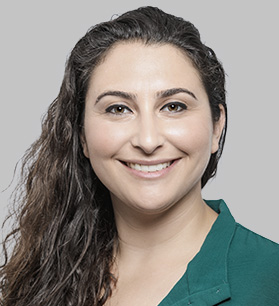
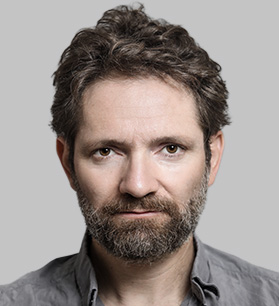
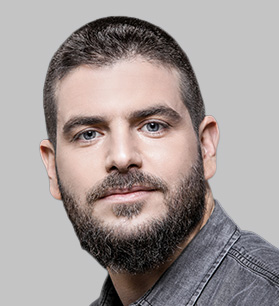
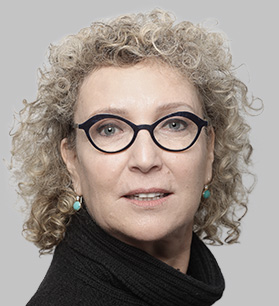
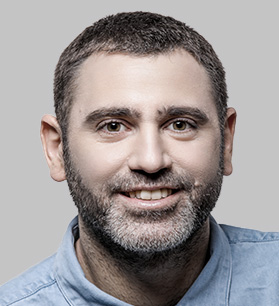
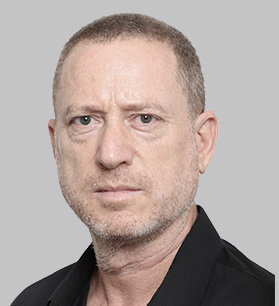
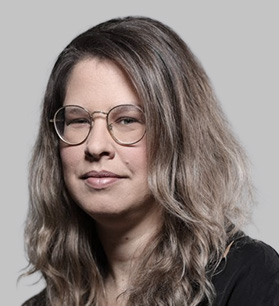
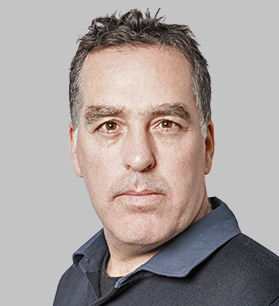
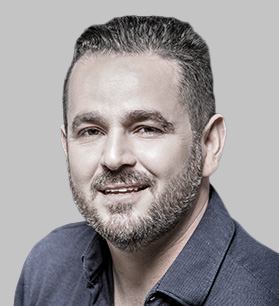
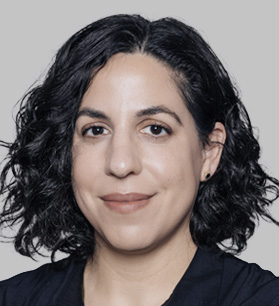
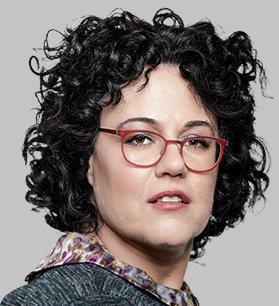
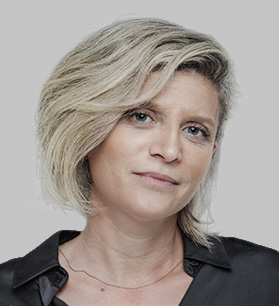
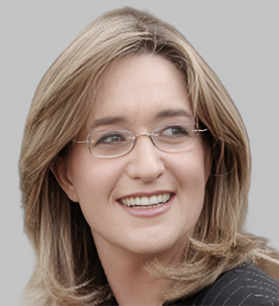
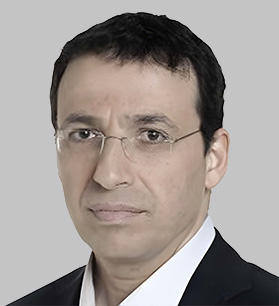
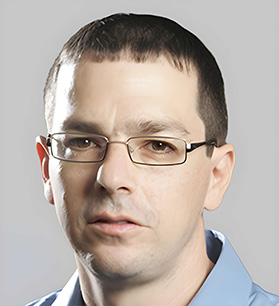
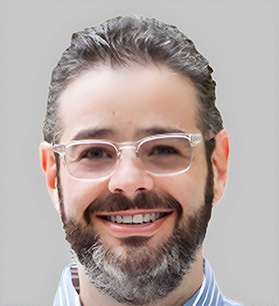
Shomrim’s Newsroom and Staff

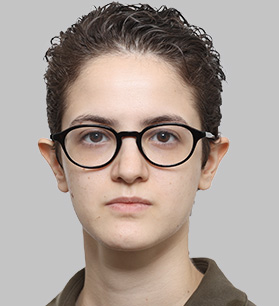
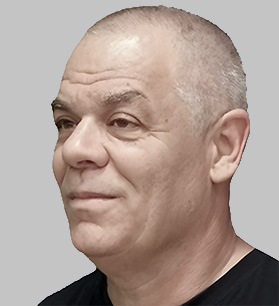
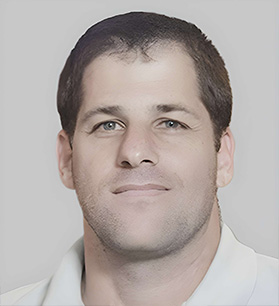
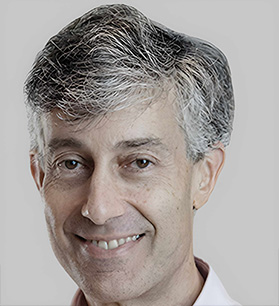
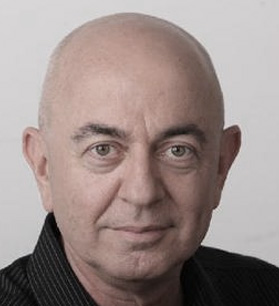
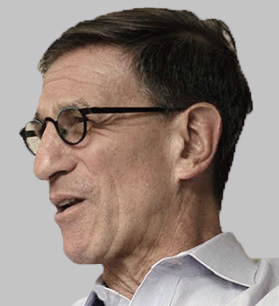
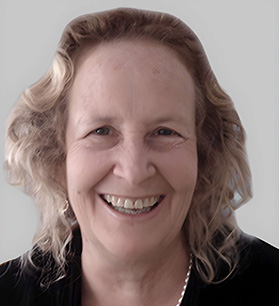
Founders and Board Members
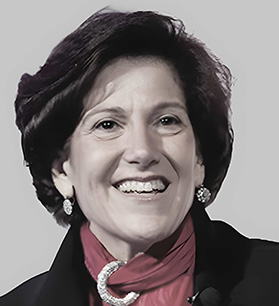
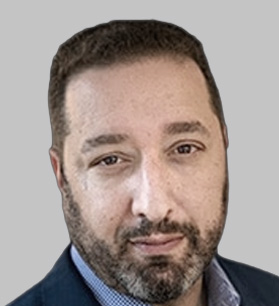
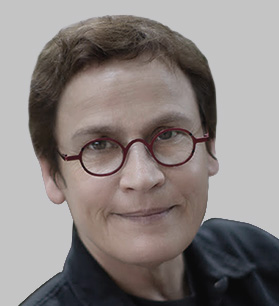
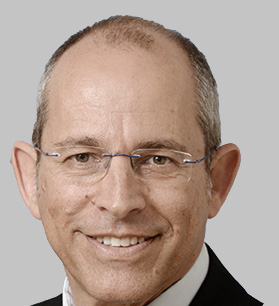
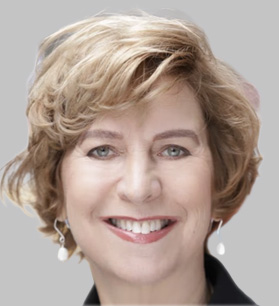
Advisory Committee



Legal Counseling
and Co. Law Firm
Audit Committee
at Tel Aviv University
Philanthropic Partners
Founders
Leaders
- The Moriah Fund, New York, NY
- The Charles H. Revson Foundation, New York, NY
- Anonymous
- Anonymous
- Anonymous
Guardians
- Gerson Bakar Foundation, San Francisco, CA
- Dan David Foundation, Vaduz, Liechtenstein
- The Feldman Foundation, San Francisco, CA
- German-Israeli Future Forum Foundation, Berlin, Germany
- Libitzky Family Foundation, San Francisco, CA
- LSE & Google News Initiative
- The Meyer and Deanne Sharlin Foundation, Bethesda, MD
- Marc and Lauren Shenfield
- Anonymous
Friends
- Arkin Family Foundation
- Karen Falk and Michael Goldman
- Valerie Feigen and Steven Eisman